Calendar, Not Countdown: A Measured UK Guide to Token Unlock Schedules
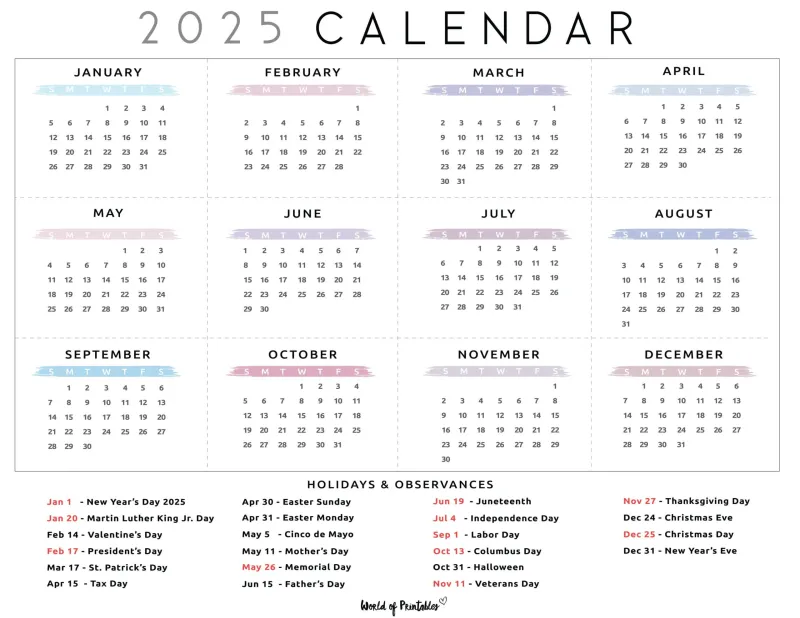
Photo: calendar and cryptocurrency chart on desk with UK newspaper stock photo, via worldofprintables.com
Token unlock calendars have become a routine feature of crypto research. They compress a complex vesting schedule into a date and a percentage, which makes them easy to share and easy to misread. As of 12 November 2026, UK readers are likely to encounter such notices on trackers, social media and exchange blogs. The useful question is not whether an unlock sounds large. It is whether the calendar entry has been read in context. At JaagCoin, the aim is cautious clarity: a schedule is information to be checked, not a signal to be followed.
Begin with the source, not the screenshot
Most unlock notices begin as a screenshot. Before accepting one, find the underlying source: the project's documentation, a tokenomics page, a governance forum post or a vesting contract. Check the date, time zone and whether the entry refers to a cliff release, a linear vesting period or a recurring emission. Trackers often estimate. Projects sometimes revise. A calendar that cannot be traced is a rumour with a nice font.
Read supply in layers
Supply figures need denominators. Circulating supply, total supply and maximum supply are not interchangeable. An unlock equal to 1% of circulating supply may be modest; the same number may be larger against daily trading volume. Fully diluted valuation can help compare projects, but it is not a forecast. Check how the tracker defines circulating supply, whether locked tokens are included, and when the data was last updated. A percentage without a denominator is decoration.
Identify who receives the tokens
Not every unlock is the same. Team and advisor allocations may follow long cliffs and linear vesting. Investor allocations may have contractual restrictions. Ecosystem, community and treasury allocations may be released for grants, incentives or operational spending. Labels on a dashboard are a starting point, not proof. Read the vesting terms where available: cliff length, release frequency, transfer restrictions and any staking or lock-up arrangements. Ask whether the recipient is a long-term holder, a market maker or a foundation. The identity of the recipient matters more than the size of the tranche.
Test liquidity before you test your nerve
Liquidity is the practical test. Compare the unlock amount with recent spot volume across credible venues, and look at order-book depth rather than a single daily volume number. A large unlock into deep markets may be absorbed; a smaller unlock into thin markets can move prices. Be wary of volume that appears concentrated or artificial. For UK readers, the same caution applies as with any promoted market: if a claim about liquidity cannot be verified, treat it as unverified. Liquidity is a condition, not a promise.
Watch announcements and on-chain signals, not just dates
Projects often publish treasury reports, governance proposals or blog posts before a material unlock. These can explain whether tokens will be sold, staked, lent or held. On-chain data can show vesting contracts releasing tokens or transfers to exchanges. It cannot show intent. A deposit to an exchange is not proof of a sale, and a wallet movement is not a forecast. Use on-chain evidence as one input, not a verdict.
A calm pre-unlock routine
Before a scheduled date, a short written routine can reduce the chance of reacting to a headline. The following checklist is deliberately modest:
- Confirm the date, time and time zone from a primary source.
- Reconcile circulating, total and maximum supply.
- Read the vesting terms and any transfer restrictions.
- Identify the recipient category and, where possible, the specific wallet or contract.
- Compare the tranche with recent volume and order-book depth.
- Note the project's official announcement channels and set a reminder.
- Decide in advance what you will not do on the day, such as trading on an unverified screenshot.
- Keep records of any transaction for your own tax and accounting purposes. HMRC generally treats cryptoassets as property for tax purposes, and disposals can have consequences.
Why a large unlock is not automatically a sell signal
A large unlock can be a risk. It can also be a known event that markets have already considered. Vesting schedules are usually public well in advance. Some recipients are long-term participants; some tranches are earmarked for ecosystem growth rather than sale. Demand, liquidity, project execution and broader market conditions all matter. The presence of a date does not tell you the direction of price. It tells you that supply may change. That is a reason for research, not a reason for panic.
The JaagCoin approach
JaagCoin's editorial position is neutral and educational. We do not issue buy or sell recommendations, and nothing here is financial advice. We prefer readers to understand a token's calendar rather than react to a countdown. If an unlock notice appears in your feed, slow down, open the primary documents and ask what the percentage is measured against. A calm reader with a checklist is better placed than a fast reader with a screenshot.